SmartScrape
Self-hosted, AI-driven web scraping with structured extraction, change detection, and notifications.
Problem
Most "AI scraping" tools either ship as opaque SaaS with your data on someone else's servers, or require you to hand-author selectors for every site you want to track. Neither fits a freelance workflow where the same client might ask to monitor a competitor's price list one week and an in-stock RSS-less inventory page the next.
The brief was a tool that takes a URL and a plain-English description, produces a working scrape configuration, runs it on a schedule, detects what actually changed between runs, and notifies — all self-hosted, with the operator's own API keys.
SmartScrape screenshots
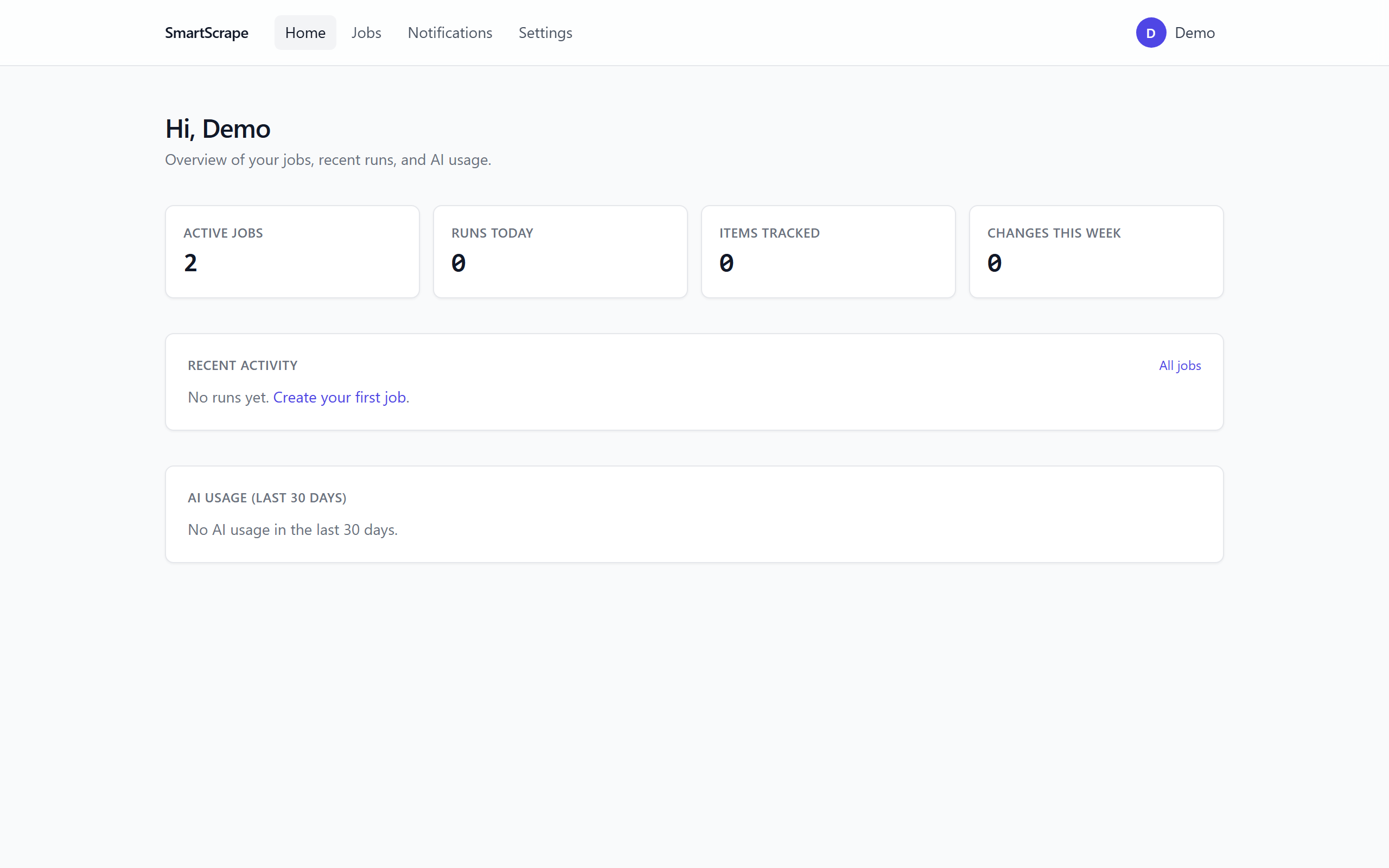
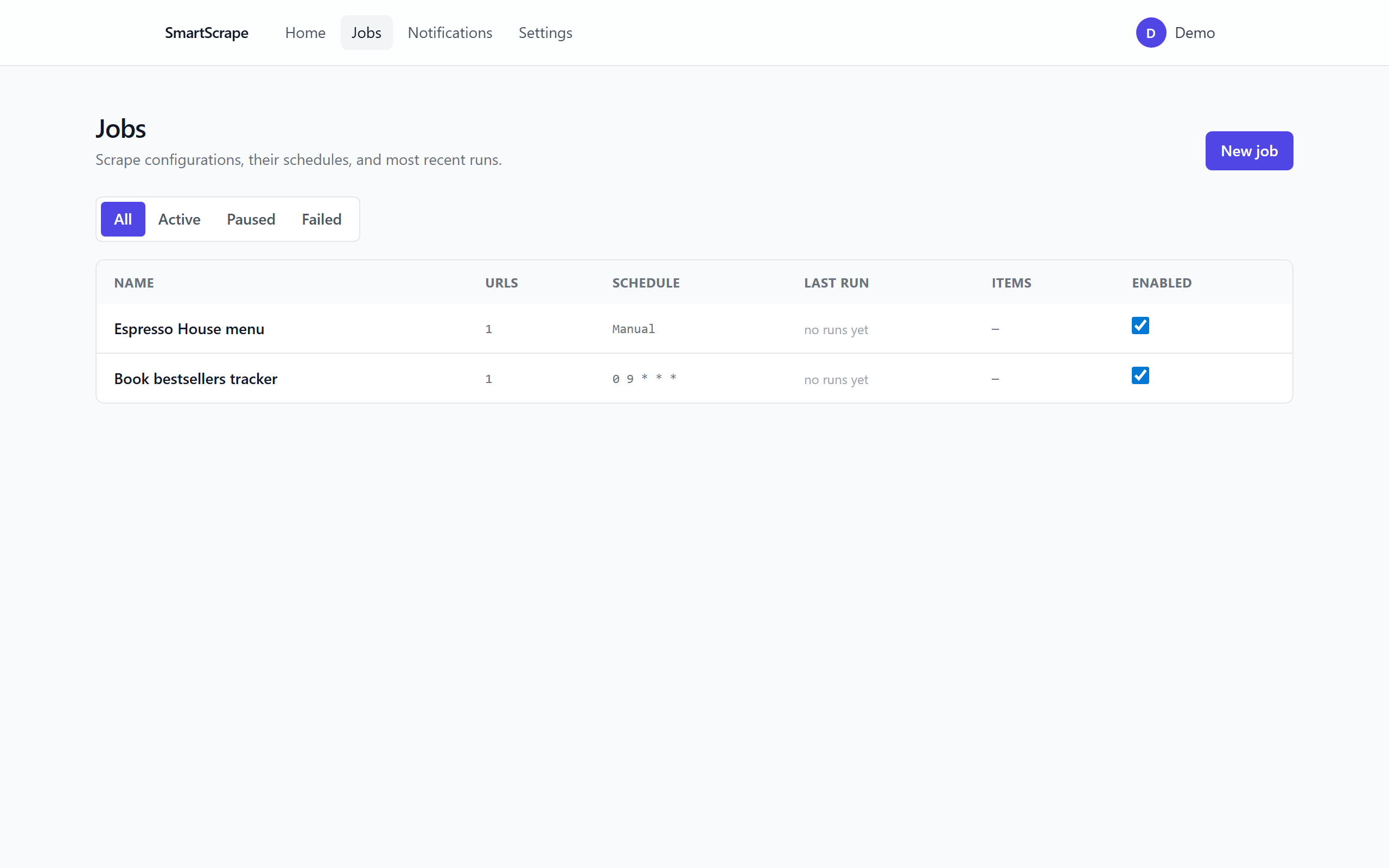
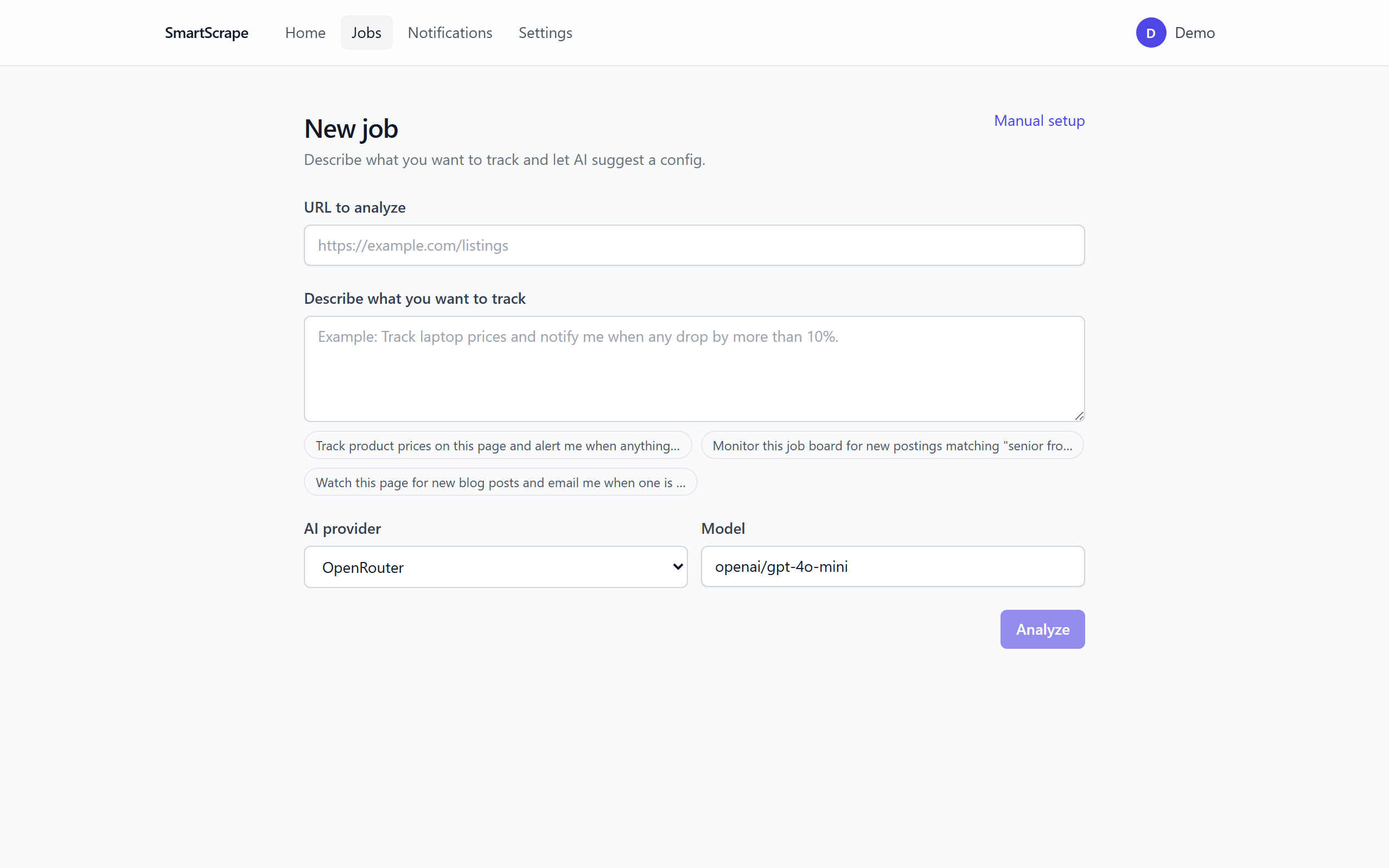
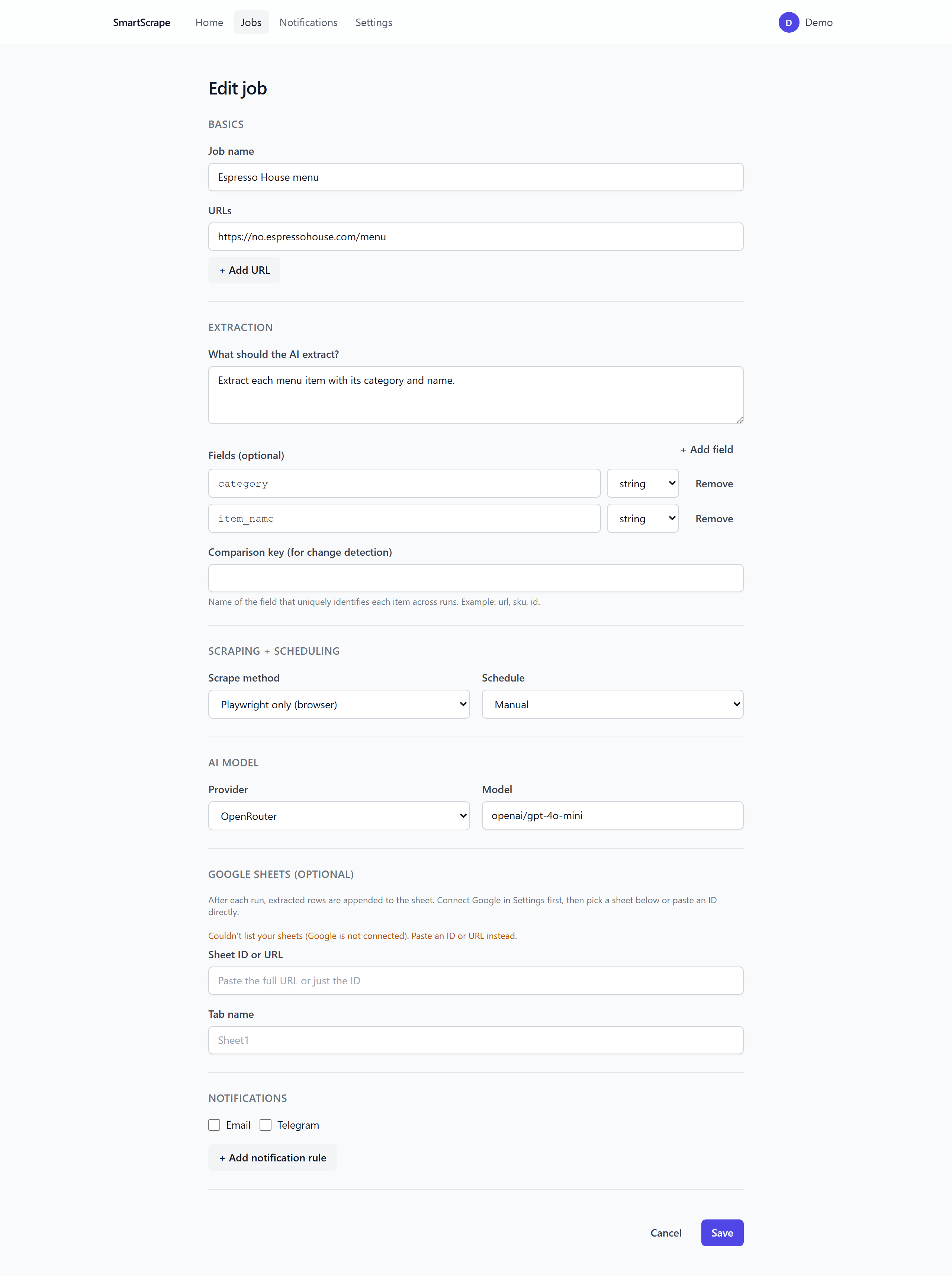
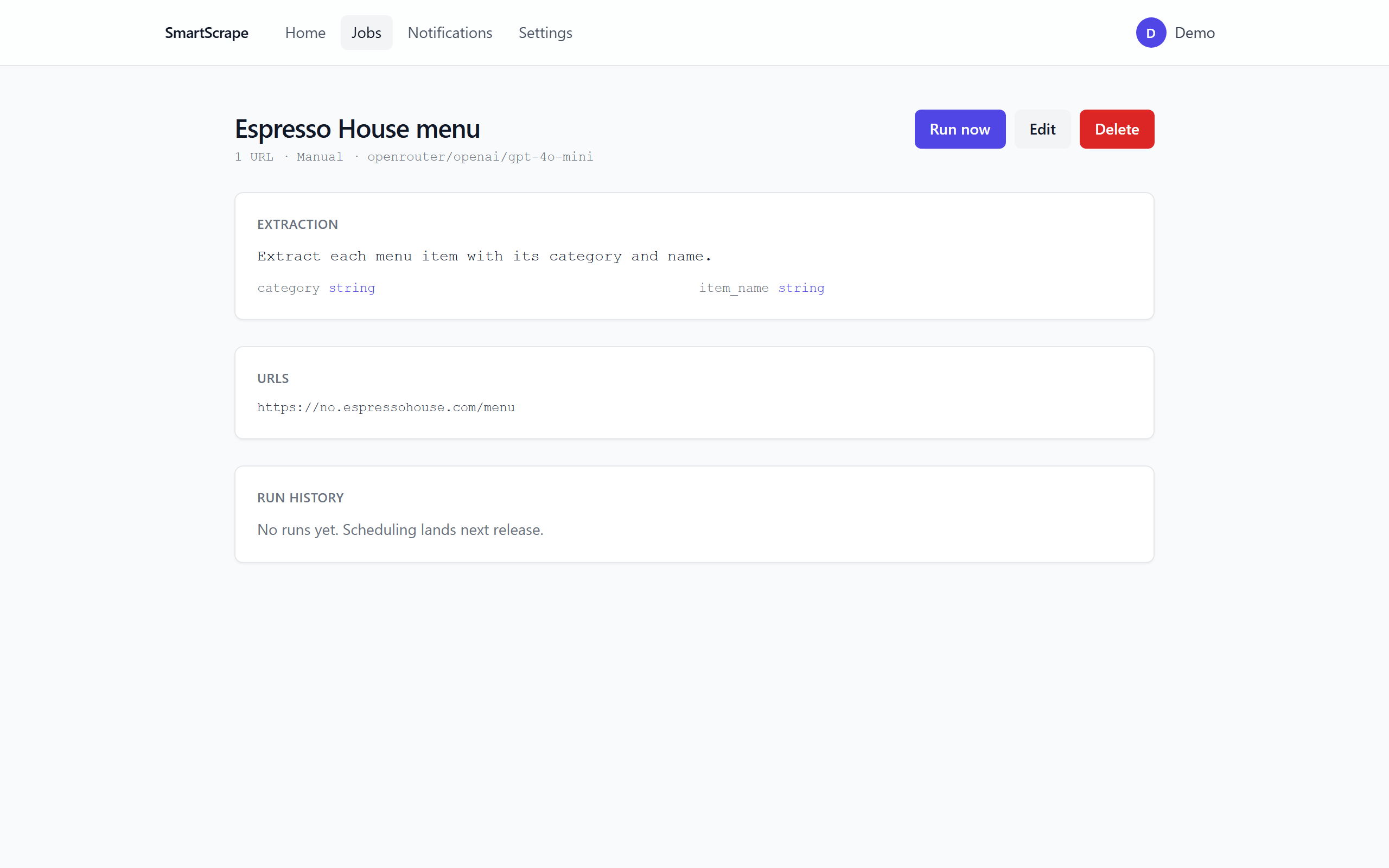
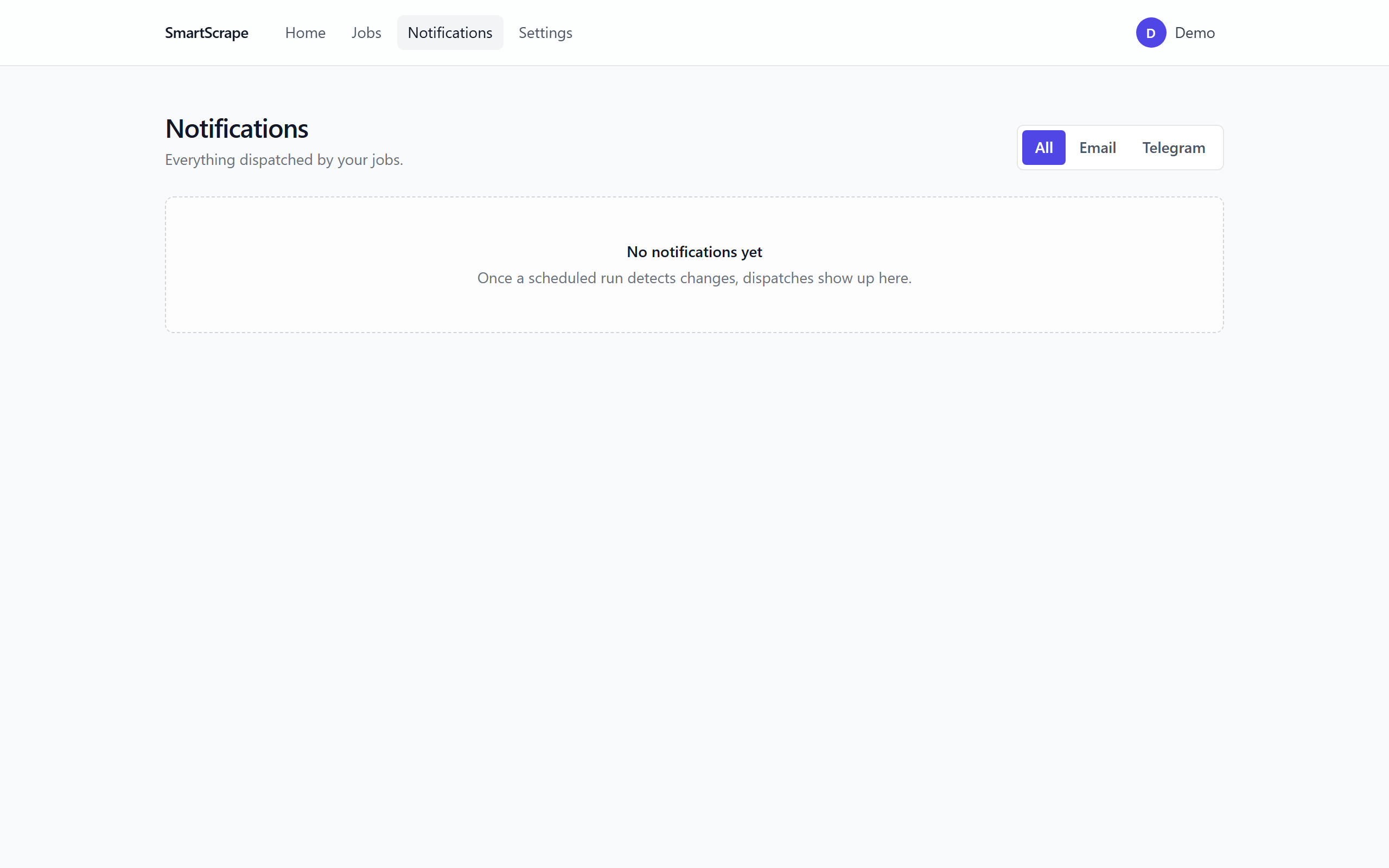
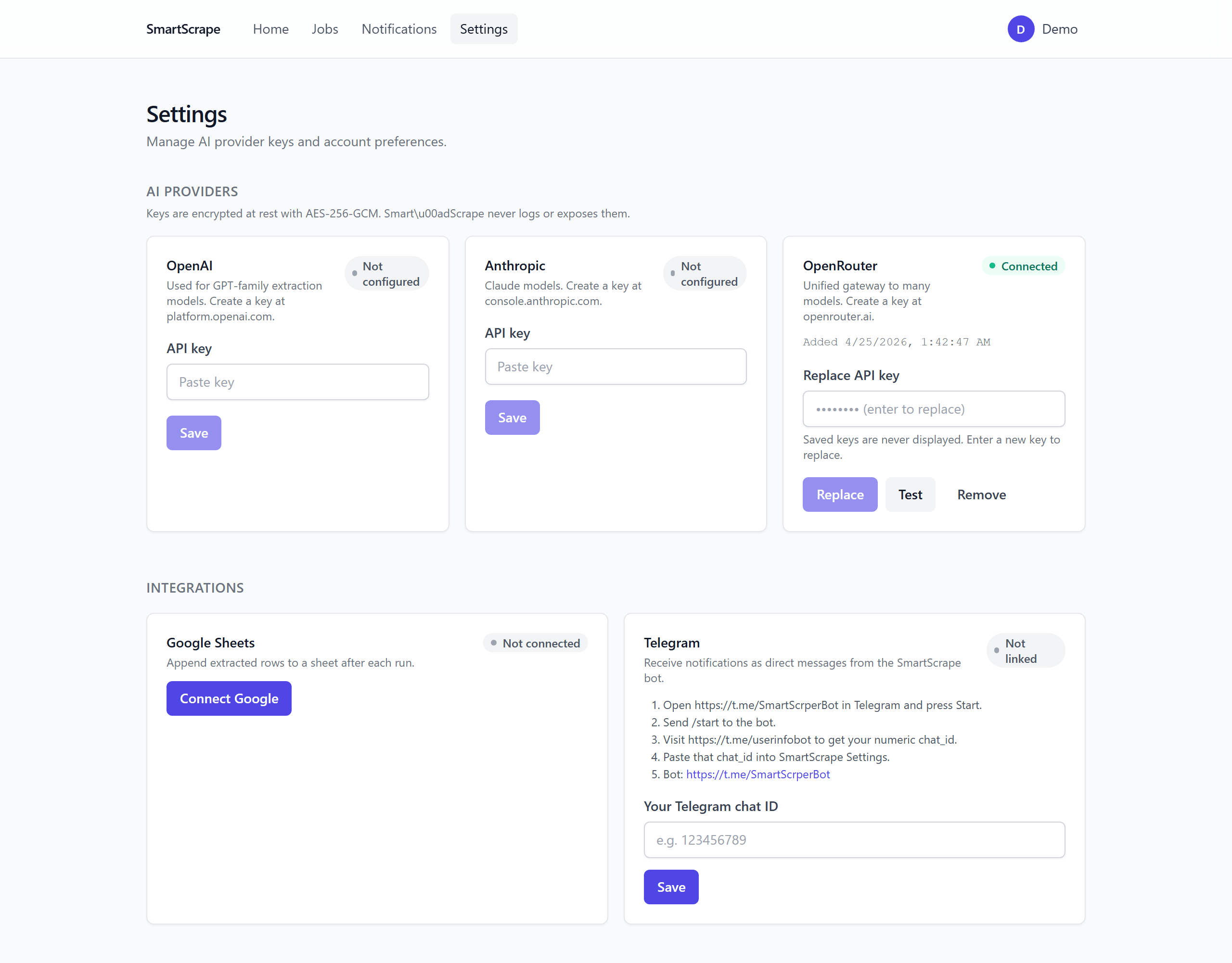
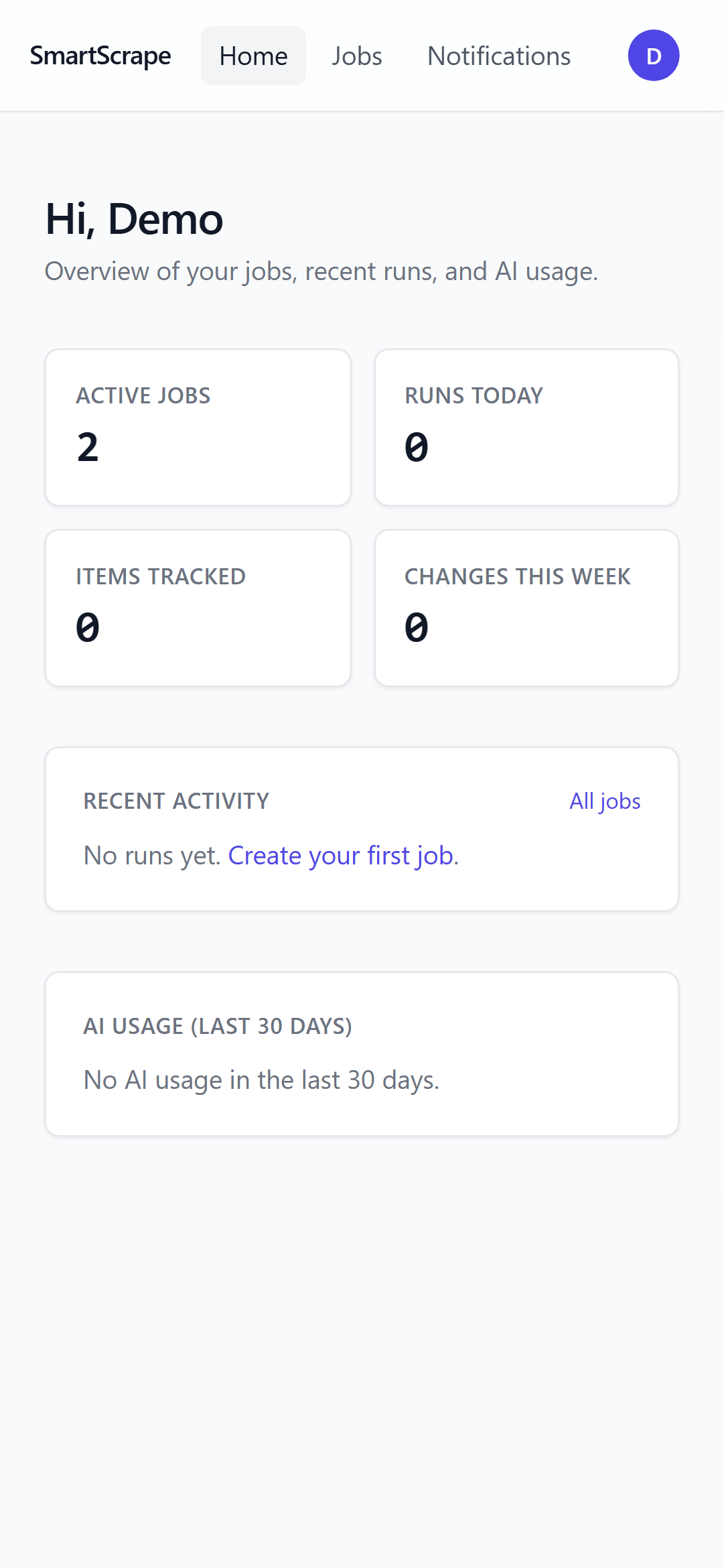
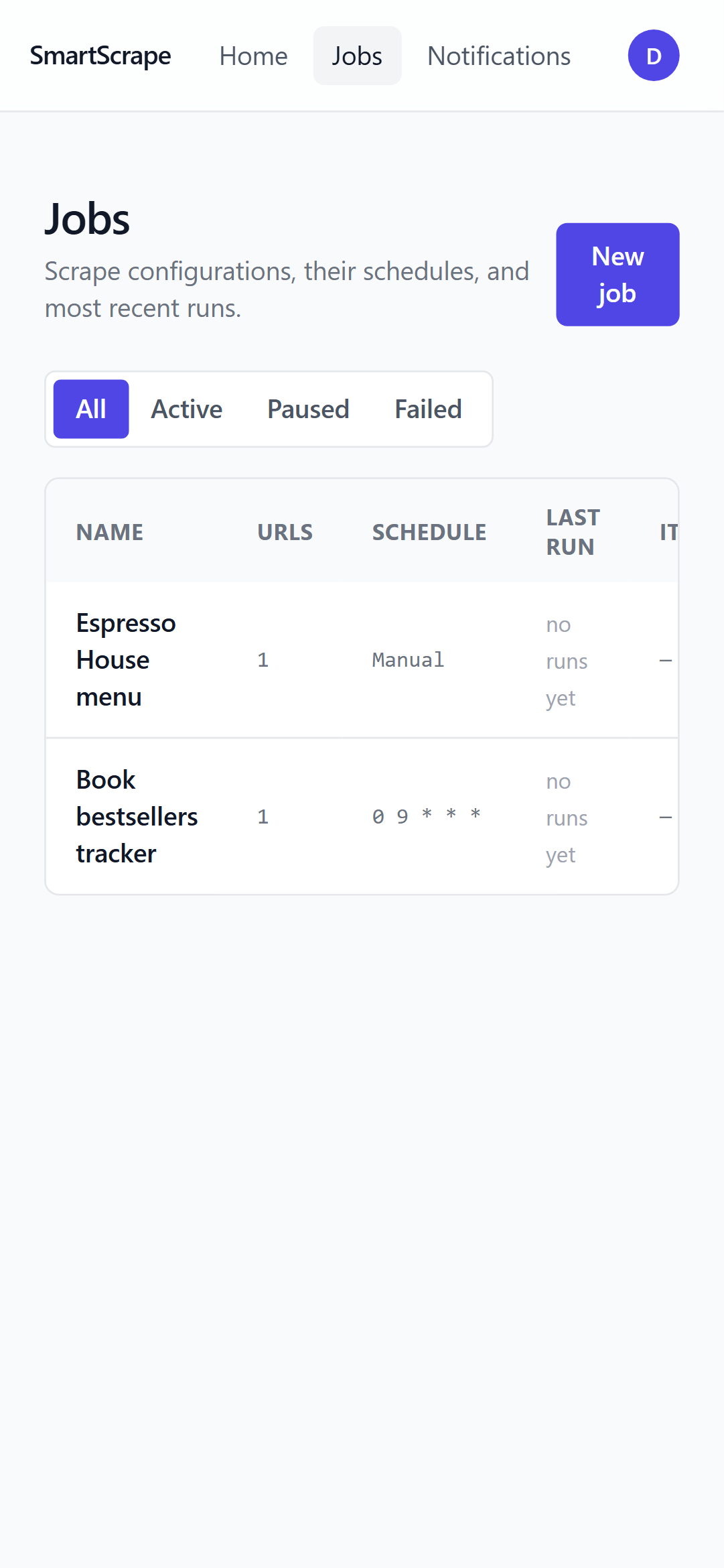
01 / 09Home — recent runs and at-a-glance status
Approach
A single Node/TypeScript service with a React SPA, deployed via Docker Compose alongside Postgres. The core loop is deliberately small:
- Configure. A wizard sends the target page and the user's brief to an LLM (OpenRouter / OpenAI / Anthropic — the user chooses) and proposes a JSON extraction schema, a comparison key, and notification rules. The user accepts, edits, or starts over manually.
- Fetch. Cheerio for static HTML where it works; Playwright when it doesn't. The choice is auto-detected per job.
- Diff. SHA-256 per extracted row, matched across runs by the user-chosen comparison key. The output is an added / removed / changed delta, not a full document diff.
- Notify. Rule types include any-change, new-items, removed-items, field
threshold (
price < 500), and field-value transitions. Delivery to email or Telegram.
Security work that mattered more than the AI surface: API keys and OAuth tokens encrypted with AES-256-GCM at rest, bcrypt-hashed passwords, JWT with rotating refresh tokens, an SSRF guard on every user-supplied URL, prompt-injection hardening on every extraction call, CORS locked to the configured frontend, Helmet headers, and zero outbound analytics.
Result
A working, deployable tool with mobile-responsive UI, OAuth-backed Google Sheets export, and a CI pipeline that gates merges. Built for the kind of freelance brief that comes in as a sentence — "tell me when this competitor drops a SKU below £X", or "flag new listings on this page overnight" — and turns into a working scrape config without hand-authoring selectors.
Honest status: engineering-complete at v0.9.0, not yet operated in production. The next step is a 60-day self-hosted pilot on my own infrastructure, running monitors I actually want — this page gets rewritten with real run counts, change deltas, and uptime once those numbers exist, not before.